HG Motorsport
Bull-X front silencer replacement pipes 2.75" Audi RS4/RS5 B9 quattro 450hp (HGVSDERS45B9M)300.50€ 316.32€ VAT included
HG Motorsport
Bull-X front silencer replacement pipes 2.75" Audi RS4/RS5 B9 quattro 450hp (HGVSDERS45B9M)300.50€ 316.32€ VAT included
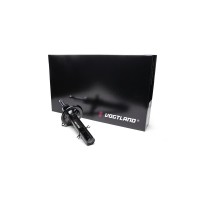
Vogtland
Vogtland sport suspension kit 35/35 mm - Audi A1 Sportback, type GB, 25/30/35 TFSI, incl. sport suspension, adaptive damping, only twist-beam rear axle (960819)571.79€ VAT included

AP
AP Springs FORD Focus II Station Wagon (25930039)187.41€ VAT included
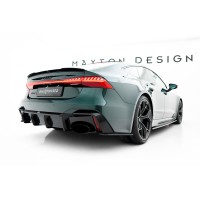
Maxton Design
Maxton Design Prepreg Carbon Fiber Rear Diffuser Audi RS7 C8 C8 (version without towbar) (CF-AU-RS6-C8-RS1-245-P)1,387.63€ VAT included

V-MAXX
V-MAXX Lowering springs ALFA ROMEO 156 GTA SPORTWAGON (932) (35 AR 19)174.88€ VAT included
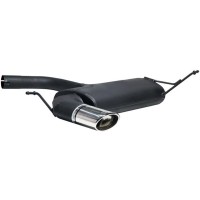
Ulter Sport
Ulter Sport Rear silencer for SEAT Leon II FR 200HP 2005-2012, 120×80 mm, oval, 1 tailpipe (124-110/27)276.66€ VAT included
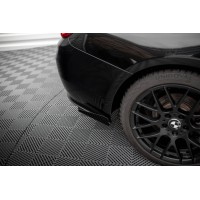
Maxton Design
Maxton Design Rear Side Flaps BMW 4 Gran Coupe F36 (BM4F36GCCNC-RSF1G)58.52€ VAT included
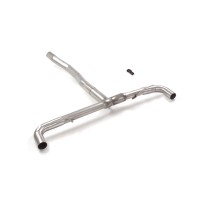
Ragazzon
Ragazzon Stainless steel rear tubes for original aesthetic tail pipes (50.1023.40)631.30€ VAT included

ST
ST Wheel bolt with loose seat (56110487)38.67€ VAT included

Maxton Design
Maxton Design Rear Splitter (with vertical bars) Ford Explorer XLT Mk6 (FO-EX-6-XLT-RD1G+RD2G)246.98€ VAT included

ST
ST Springs Mini (R50, R53) (28220080)217.16€ VAT included
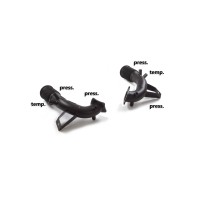
Ragazzon
Ragazzon Stainless steel pipes with ceramic treatment OPF / GPF filters replacement pipes group n left/right (50.1076.80)2,100.40€ VAT included
V-MAXX
V-MAXX Lowering springs MINI CLUBMAN JOHN COOPER WORKS ALL4 (F54) (35 MN 46)126.21€ VAT included
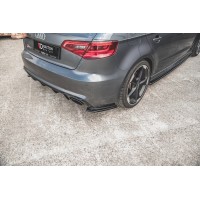
Maxton Design
Maxton Design Rear Side Splitters V.1 Audi RS3 8V Sportback (AU-RS3-8V-RSD1G)88.28€ VAT included
ST
ST Wheel nut anti-theft-protection (56120138)48.59€ VAT included
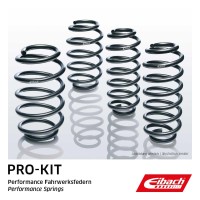
Eibach
Eibach Pro-Kit lowering springs MB SLK (R171) (E10-25-013-02-22)444.86€ VAT included

Maxton Design
Maxton Design Street Pro Rear Diffuser Seat Leon FR ST Mk4 (SELE4FRSTCNC-RS1B+BRBI)202.20€ VAT included
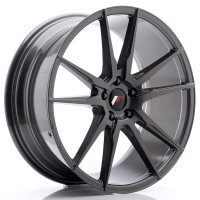
JR Wheels
JR Wheels JR21 20×8.5″ 5x120 ET35 Hyper Gray CB74.1413.00€ VAT included

ST
ST Wheel spacer (56020080)127.92€ VAT included
Eibach
Eibach Pro-Kit lowering springs AUDI A3 (8L1) (E10-15-004-03-22)352.82€ VAT included
 0 item(s) - 0.00€
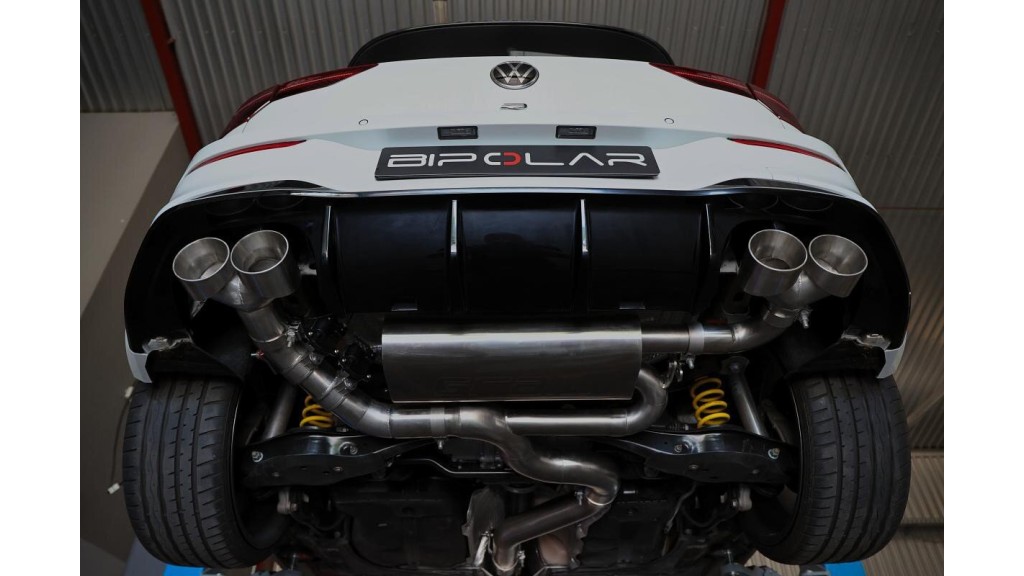
Most of what an aftermarket exhaust gives you is sound and weight, and the honest version of that sentence is worth reading before you order.
An exhaust is the most emotional purchase in the catalogue. It is also the one where expectations and physics part company most often, so it is worth being direct about what changes and what does not.
An engine has to push exhaust gas out. Anything that makes that harder costs power. On a naturally aspirated engine near its limit, or on a turbo engine where a restrictive section sits close to the turbine, replacing that restriction is worth something real.
On a stock modern car, the factory system is usually not the restriction. The catalytic converter and the particulate filter, where fitted, dominate the flow picture, and a rear silencer swap downstream of all of that changes the sound and very little else. That is not a criticism of rear silencers — it is a reason to buy one for the sound and not be disappointed by the dyno.
Where the gains do turn up: turbocharged engines with a genuinely restrictive downpipe, engines already running more boost than standard, and systems where the whole path is replaced rather than just the last metre. Even then, treat any single headline figure with suspicion unless you know what the car, the fuel, the software and the weather were on the day.
Factory systems are usually mild steel with heavy silencers. A stainless or titanium replacement can remove a genuinely useful amount of mass, low down and behind the rear axle — the single best place on the car to take weight out of. This is a real benefit and it is rarely the headline.
Noise limits, emissions equipment and what may be removed are regulated, and the rules differ between countries and between the road and a closed circuit. Removing emissions equipment from a road car is a different matter from fitting a louder silencer, and the two are often discussed as if they were the same.
Products are sold with different documentation depending on the part and the market, and a marking on one component does not carry over to another. Check what applies where your car is registered, before ordering, and keep everything that comes in the box.
Unless a product page states otherwise, we cannot confirm the legal status of a part for your specific vehicle and country. That responsibility sits with the owner, and it is a great deal cheaper to resolve before the parts arrive.
Budget for new gaskets and clamps rather than reusing old ones — a leak upstream of a sensor will produce running faults that look like something far more serious. Check clearance to the body and to any heat shielding once the system is hung, and check it again when the car is loaded, not just empty on a lift. Stainless systems move as they heat, and a contact point that is fine cold will make itself heard hot.
Decide first whether you are buying sound, weight or flow, because the answer changes which part of the system you should be replacing. Then check the noise rules where you drive. Then choose the brand. Doing it in that order is how people end up keeping the exhaust they bought.